
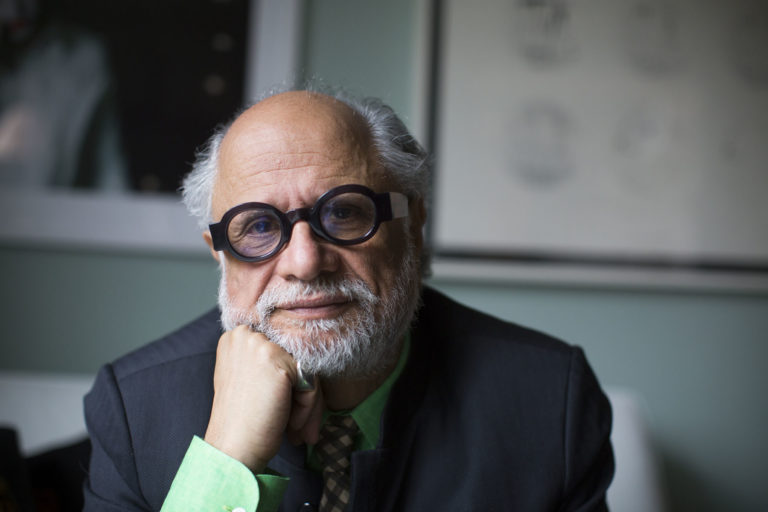
This essay grew from undergraduate work completed under the supervision of Dr Sabiha Allouche.
Postcolonial thought asks how empire survives after formal colonial rule has ended. Its concern is not only who governs territory, but whose language defines progress, whose knowledge appears universal and whose experience is treated as marginal. From Homi K. Bhabha’s cultural boundaries to debates about development, migration and the Global South, the field challenges the apparently neutral categories through which the modern world has been organised.1
Bhabha and the boundary of culture
Homi K. Bhabha begins from the idea that a boundary is not simply where something ends. It is also where something begins to become present. Culture is therefore produced through encounters, translations and negotiations rather than contained within sealed national or civilisational units. Identities emerge in what Bhabha calls an in-between or “third” space.2

This approach challenges the idea that history moves along a single path from tradition to Western modernity. Colonial power depended upon such narratives: Europe represented itself as advanced and positioned colonised societies as earlier stages of the same universal development. Bhabha instead draws attention to contingency, contradiction and dissonance. The apparent coherence of colonial authority is disrupted by the people who translate, imitate and transform its languages.3
Even “multiculturalism” can retain an unequal structure if one supposedly central culture merely welcomes a collection of others. The host remains unmarked and authoritative, while difference becomes something added to it. Bhabha’s concepts of hybridity and ambivalence help us see cultures as mutually constituted. They also prevent resistance from being imagined as a return to a pure identity untouched by colonial exchange.4
This is neither cultural uniformity nor limitless pluralism. It is an attempt to understand how political and cultural identities acquire provisional form across different times and places. Cultures do not move synchronously, nor do they possess histories that can be measured against a single Western timetable.
Fanon, Sartre and the politics of liberation
Frantz Fanon placed the violence of colonial domination at the centre of decolonisation. Colonialism did not merely occupy land; it organised race, language, psychology and the possibilities of political agency. Jean-Paul Sartre wrote the preface to the 1961 French edition of The Wretched of the Earth, helping to bring Fanon’s argument to a wider European readership. That act of mediation also raises a characteristic postcolonial question: who is authorised to introduce, interpret or legitimise the speech of the colonised?5

Fanon rejected the belief that political independence alone would complete liberation. Colonial categories could be reproduced by national elites after the imperial administration departed. Decolonisation therefore required a remaking of political institutions, social relations and the forms through which people understood themselves.6
Gender, memory and intersectionality
Anti-colonial histories have often been narrated through “great men”, marginalising women whose political work did not fit the preferred story of national liberation. Sisonke Msimang’s study of Winnie Madikizela-Mandela, read alongside Shireen Hassim’s broader analysis of women’s organisations and political authority in South Africa, shows how gender shapes both political action and its later commemoration. The question is not simply whether a significant woman should be added to an existing heroic canon, but how that canon was constructed.7
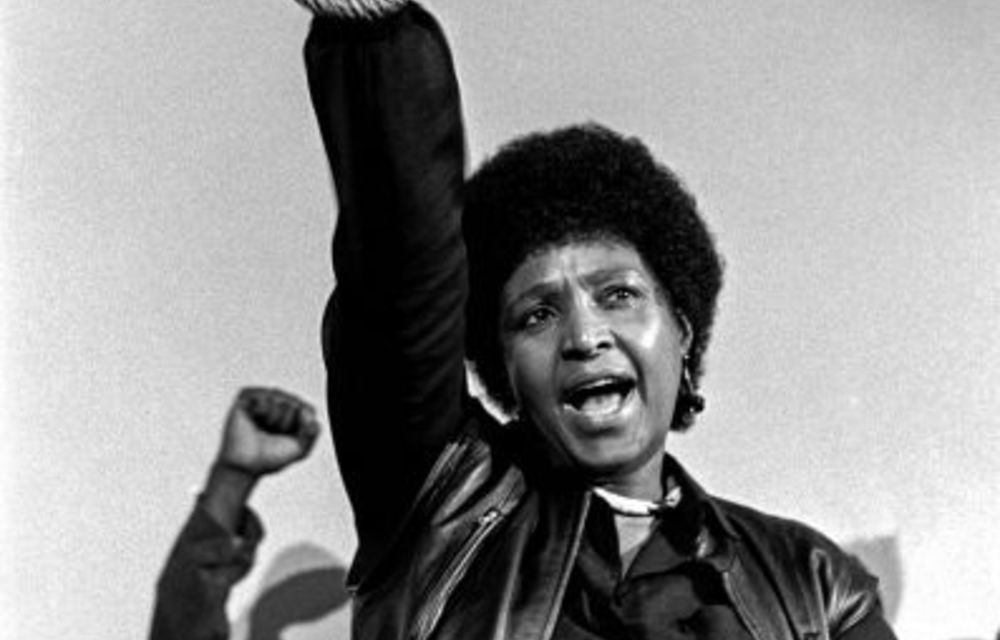
Madikizela-Mandela’s position exposes tensions between gender, nationalism, political violence and public memory. A critical history must resist both sanctification and dismissal. It should examine why male leaders are so readily allowed complexity while women are often required to appear either exemplary or irredeemable. Intersectional analysis reveals that colonialism, race, class and patriarchy did not operate as separate systems.
The Global South and an ecology of knowledge
Boaventura de Sousa Santos describes an “abyssal line” dividing forms of knowledge recognised by dominant institutions from those rendered invisible or irrational. His sociology of absences asks how experience is actively produced as nonexistent; his sociology of emergences looks for possibilities that established theory has failed to recognise.8
The answer is not to replace one universal doctrine with another. De Sousa Santos calls for an ecology of knowledges: a plural field in which different intellectual traditions can encounter one another without being translated in advance into a single Western vocabulary. Translation remains necessary, but it should become reciprocal and attentive to unequal power.
This argument is a warning against “epistemicide”, the destruction or disqualification of knowledge through conquest and institutional dominance. Universities, research centres and development agencies do not stand outside these histories. They can reproduce the hierarchy between expert and subject even when their stated purpose is humanitarian.9
Development as a political language
Arturo Escobar’s critique of development examines how poverty became an object to be measured, managed and corrected by international expertise. Statistics can identify genuine deprivation, but they also create standardised “underdeveloped” subjects whose futures are judged against a Western model. Development then appears as a technical solution to conditions partly produced by colonial extraction and global inequality.10
This does not mean that ill health, hunger or unequal access to education should be romanticised. The sharper question is who defines the problem, who speaks with authority and which political alternatives are excluded. Humanitarian language can coexist with relationships that leave outside institutions in control of funding, knowledge and priorities.
Escobar’s post-development argument does not simply propose better techniques for delivering the same predetermined destination. It distinguishes “development alternatives” from “alternatives to development”: political possibilities that challenge the assumption that every society must follow a single ladder of modernisation.11
Subalternity, migration and British citizenship
The term “subaltern”, developed through Antonio Gramsci and transformed by later scholars, directs attention to groups whose historical agency is subordinated or rendered illegible within dominant political categories. Gayatri Chakravorty Spivak sharpened the problem by asking how institutions determine which kinds of speech become credible and authoritative. Subalternity is therefore not the same as having no voice; it concerns the conditions under which a voice can be recognised as political speech.12
Migration makes this problem especially visible. Assimilation imagines a straight line from outsider to an already complete national culture. A more plural politics accepts that the nation itself changes through migration. Yet even multiculturalism can freeze people into fixed communities and assign them identities that do not reflect their own experience.

British immigration law illustrates the persistence of the threatening “other”, from the Aliens Act 1905 and the Special Restriction (Coloured Alien Seamen) Order 1925 to post-war Commonwealth restrictions and the later hostile-environment policy. Citizenship tests and administrative surveillance do more than regulate entry. They communicate an official account of belonging and ask migrants to demonstrate proximity to it.13
Abdelmalek Sayad’s idea of the migrant’s “double absence” captures the resulting instability: separated from the homeland while never fully accepted by the host society. Migrants may be welcomed as labour during economic expansion and recast as burdens in periods of insecurity. Their value is treated instrumentally, obscuring their agency as citizens, workers and makers of culture.14
Two research papers
My critical review of fair-trade coffee considers whether apparently ethical consumption can preserve unequal relations between Western consumers, institutions and producers in the Global South. It asks whether charity challenges the postcolonial order or makes it more comfortable.
A second paper, A Postcolonial Reading of International Relations, examines the movement from liberal and neoliberal accounts of development towards approaches centred on cultural and economic independence.
Conclusion
Postcolonial thought is best understood as a practice of questioning boundaries: between coloniser and colonised, universal and local, expert and subject, homeland and migrant. Bhabha shows that identities emerge through negotiation; Fanon demonstrates that formal independence does not by itself undo colonial power; feminist and Southern perspectives reveal voices obscured within apparently emancipatory histories.
The field does not offer a single replacement theory of the world. Its value lies in making inherited categories answerable to the histories of violence and exclusion that produced them. It asks not only what we know, but who was permitted to define knowledge in the first place.
Related Reading
Continue exploring related themes across The Intellectual Historian:
- Empire after Empire? Soviet Rule, Decolonisation and the Politics of Collapse
- The Political Power of Song in the Baltic Way and the Collapse of Soviet Rule
- Louis Althusser: Ideology, Institutions and the Politics of Philosophy
Notes
- Edward W. Said, Orientalism (New York: Pantheon Books, 1978), 1–28; Frantz Fanon, The Wretched of the Earth, trans. Richard Philcox (New York: Grove Press, 2004), 1–62. ↩
- Homi K. Bhabha, The Location of Culture (London: Routledge, 1994), 7, 36–39. ↩
- Bhabha, Location of Culture, 85–92; Said, Orientalism, 1–28. ↩
- Bhabha, Location of Culture, 85–92, 112–15. ↩
- Fanon, Wretched of the Earth, 1–62; Jean-Paul Sartre, “Preface,” in Fanon, Wretched of the Earth, xliii–lxii. ↩
- Fanon, Wretched of the Earth, 97–144. ↩
- Sisonke Msimang, The Resurrection of Winnie Mandela (Johannesburg: Jonathan Ball, 2018), 1–20; Shireen Hassim, Women’s Organizations and Democracy in South Africa: Contesting Authority (Madison: University of Wisconsin Press, 2006), 1–24. ↩
- Boaventura de Sousa Santos, Epistemologies of the South: Justice against Epistemicide (Boulder, CO: Paradigm Publishers, 2014), 118–35, 209–35. ↩
- Santos, Epistemologies of the South, 92, 185–211. ↩
- Arturo Escobar, Encountering Development: The Making and Unmaking of the Third World (Princeton, NJ: Princeton University Press, 1995), 21–54. ↩
- Escobar, Encountering Development, 212–26, esp. 215. ↩
- Antonio Gramsci, “History of the Subaltern Classes: Methodological Criteria,” in Selections from the Prison Notebooks, ed. and trans. Quintin Hoare and Geoffrey Nowell Smith (New York: International Publishers, 1971), 52–55; Gayatri Chakravorty Spivak, “Can the Subaltern Speak?” in Marxism and the Interpretation of Culture, ed. Cary Nelson and Lawrence Grossberg (Urbana: University of Illinois Press, 1988), 271–313. ↩
- Nadine El-Enany, (B)ordering Britain: Law, Race and Empire (Manchester: Manchester University Press, 2020), 129–58. ↩
- Abdelmalek Sayad, The Suffering of the Immigrant, trans. David Macey (Cambridge: Polity, 2004), 1–10. ↩
Bibliography
- Bhabha, Homi K. The Location of Culture. London: Routledge, 1994.
- El-Enany, Nadine. (B)ordering Britain: Law, Race and Empire. Manchester: Manchester University Press, 2020.
- Escobar, Arturo. Encountering Development: The Making and Unmaking of the Third World. Princeton, NJ: Princeton University Press, 1995.
- Fanon, Frantz. The Wretched of the Earth. Translated by Richard Philcox. New York: Grove Press, 2004.
- Gramsci, Antonio. “History of the Subaltern Classes: Methodological Criteria.” In Selections from the Prison Notebooks, edited and translated by Quintin Hoare and Geoffrey Nowell Smith, 52–55. New York: International Publishers, 1971.
- Hassim, Shireen. Women’s Organizations and Democracy in South Africa: Contesting Authority. Madison: University of Wisconsin Press, 2006.
- Msimang, Sisonke. The Resurrection of Winnie Mandela. Johannesburg: Jonathan Ball, 2018.
- Said, Edward W. Orientalism. New York: Pantheon Books, 1978.
- Santos, Boaventura de Sousa. Epistemologies of the South: Justice against Epistemicide. Boulder, CO: Paradigm Publishers, 2014.
- Sartre, Jean-Paul. “Preface.” In The Wretched of the Earth, by Frantz Fanon, xliii–lxii. Translated by Richard Philcox. New York: Grove Press, 2004.
- Sayad, Abdelmalek. The Suffering of the Immigrant. Translated by David Macey. Cambridge: Polity, 2004.
- Spivak, Gayatri Chakravorty. “Can the Subaltern Speak?” In Marxism and the Interpretation of Culture, edited by Cary Nelson and Lawrence Grossberg, 271–313. Urbana: University of Illinois Press, 1988.
Article word count: 1,320 words
Cite this article
Chicago style: Samuel Woodall, “Postcolonial Thought: Bhabha, the Global South and Cultural Boundaries,” The Intellectual Historian, 8 October 2024, https://theintellectualhistorian.com/2024/10/08/postcolonialism/.
Leave a Reply