
This essay grew from undergraduate work completed under the supervision of Dr Catherine Owen.
Was the Soviet Union an anti-imperial federation, a new form of empire, or both at once? The question matters because the political geography of contemporary Eastern Europe and Central Asia was shaped not only by the collapse of Soviet rule in 1991, but by the institutions, borders and national categories created during the Soviet period itself. Bolshevik leaders denounced European colonialism and promised national self-determination. Yet Moscow also governed an immense, unequal space from its political centre. Post-Soviet politics emerged from that contradiction.1
Revolution, empire and korenizatsiya
Before 1917, identities across Central Asia did not always correspond to the nation-state categories that later became familiar. Kinship, locality, religion and language could matter more than a fixed relationship between ethnicity and territorial statehood. Russian imperial expansion nevertheless brought settlement, administration and economic extraction. The Bolsheviks inherited this imperial space while claiming to overturn its political logic.2
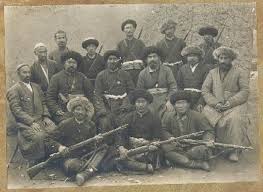
Resistance exposed the difficulty immediately. The heterogeneous Central Asian insurgencies that Soviet authorities grouped under the label “Basmachi” treated the new regime as another external and coercive force. Soviet authorities answered resistance militarily, but they also attempted to build legitimacy through korenizatsiya, usually translated as “indigenisation” or “putting down roots”. The policy promoted local languages, recruited members of titular nationalities into government and encouraged the construction of national institutions within the Union.3
This was more than simple cultural repression, but it was not full decolonisation. National development took place within borders and political hierarchies authorised by Moscow. Soviet social scientists and administrators helped define which groups would possess titular republics, which would receive lesser forms of autonomy and where territorial boundaries would lie. The state therefore cultivated national identity while retaining the power to classify and contain it.4

The Soviet Union as an imperial formation
There are good reasons not to collapse Soviet rule into a copy of the overseas empires of Britain or France. Early Soviet ideology was avowedly egalitarian, the Union invested in education and cultural production in its republics, and local elites were incorporated into institutions rather than excluded from them altogether. Soviet citizenship also offered a universal political language that many people inhabited sincerely.
At the same time, the imperial comparison reveals enduring inequalities. Power remained concentrated in Moscow; economic priorities were frequently set by the centre; population transfers and Russian settlement altered the demographic balance of several regions; and Stalin’s rule elevated Russian language and culture while subjecting entire peoples to deportation. Borders drawn as administrative solutions could later become sites of conflict when union republics became independent states.5
The most useful interpretation is therefore not a choice between “empire” and “not empire”. The Soviet Union combined anti-imperial claims, federal institutions and national development with coercion, hierarchy and rule from the centre. Its distinctiveness lay in holding these elements together. That unstable settlement shaped both the durability of the Union and the forms taken by its eventual collapse.
National memory after 1991
When Soviet authority disappeared, the national institutions it had helped construct did not disappear with it. They became the frameworks through which sovereignty was claimed. The “revenge of the past” was therefore not merely a return of ancient identities suppressed by communism. It was also the political activation of categories, borders and historical narratives that Soviet government had formalised.6
Chechnya demonstrated how violently the unresolved relationship between centre and periphery could re-emerge. Stalin’s 1944 mass deportation of the Chechen and Ingush peoples remained a powerful historical wound. The 1991 declaration of Chechen independence and the First Chechen War of 1994–96 joined demands for self-determination to memories of conquest, deportation and abolished statehood. Russia’s attempt to preserve territorial authority consequently appeared to many Chechens as the continuation of imperial domination.7
Ukraine provides another, different example. Soviet nation-building, famine, war, Russification and the experience of independence all form part of the political memory through which relations with Russia have been understood. Russia’s war against Ukraine, begun in 2014 and expanded into a full-scale invasion in 2022, sharpened the question of whether the post-Soviet space should be treated as a privileged Russian sphere or as a collection of sovereign states free to determine their own futures.8
Reform and the erosion of Soviet authority
The end of the Union also had intellectual and civic roots. The 1975 Helsinki Final Act gave dissidents a language through which to hold the Soviet state to its own declared commitments on human rights. Founded in 1976, the Moscow Helsinki Group monitored abuses, while samizdat circulated prohibited writing outside official publishing. An earlier underground practice, concentrated from the late 1940s through the early 1960s, copied restricted music onto discarded X-ray film. These activities differed in purpose and period, but each created channels of exchange beyond official institutions.9
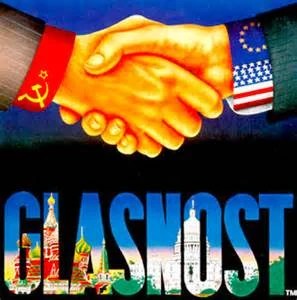
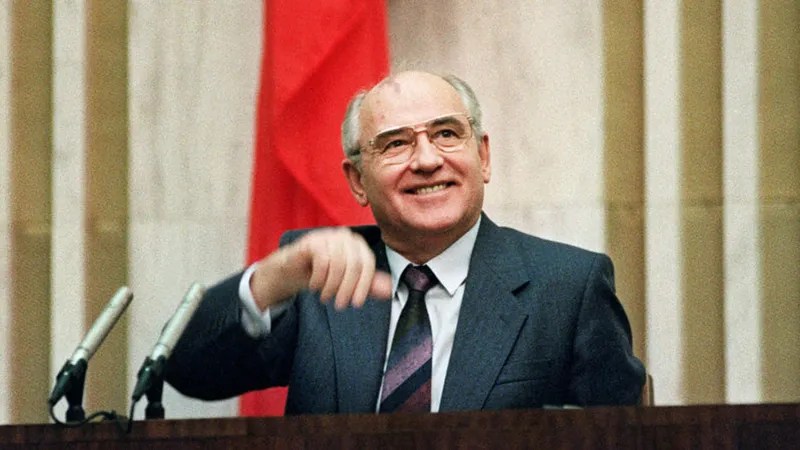
Under Mikhail Gorbachev, glasnost expanded the space for public discussion and exposed histories that official ideology had concealed. Reform was intended to renew socialism, but openness weakened the state’s monopoly over political meaning. Citizens could increasingly compare official language with shortages, corruption, environmental disaster and the violence of the past.10
The language of performativity helps explain the resulting crisis. As Alexei Yurchak argues, late Soviet public life depended heavily upon the repetition of authoritative formulas whose force did not require uniform private belief. When reform altered the conditions in which those formulas operated, the gap between institutional ritual and lived reality became politically dangerous. The Communist Party increasingly appeared less as the agent of historical transformation than as the manager of a system unable to reform itself.11
Was collapse inevitable?
Economic stagnation, corruption, national mobilisation and failed leadership all contributed to the dissolution of the USSR. Yet collapse should not be written backwards as an unavoidable conclusion. In the referendum of 17 March 1991, six union republics did not participate officially, but 77.8 per cent of valid votes cast in the nine participating republics supported preserving the USSR as a renewed federation of equal sovereign republics. Different political choices might therefore have produced a looser union or a reformed socialist settlement.12
The tragedy of 1991 lies partly in the speed with which a shared institutional and intellectual world vanished. For those who had invested their lives in Soviet citizenship, the end of the Union removed employment, welfare structures and familiar ways of interpreting history. It also released republics from rule by a centre that had repeatedly constrained their sovereignty. Liberation and dislocation were therefore experienced together.
Conclusion
Post-Soviet politics cannot be understood through a simple opposition between colonial oppression and anti-colonial liberation. The Soviet state created nations as well as subordinating them, promoted local cultures while policing political autonomy, and condemned empire while reproducing imperial relationships. Its collapse left behind both independent states and unresolved arguments about borders, memory and sovereignty.
That ambiguity remains central to the region’s politics. The Soviet inheritance is not a dead past but a contested set of institutions and historical claims. Understanding it requires us to take anti-imperial ideology seriously without allowing that ideology to obscure coercion, hierarchy and the continuing power of the imperial centre.
Related Reading
Continue exploring related themes across The Intellectual Historian:
- The Political Power of Song in the Baltic Way and the Collapse of Soviet Rule
- Postcolonial Thought: Bhabha, the Global South and Cultural Boundaries
- Fascism: Symbols, Violence and the Politics of National Rebirth
Notes
- Terry Martin, The Affirmative Action Empire: Nations and Nationalism in the Soviet Union, 1923–1939 (Ithaca, NY: Cornell University Press, 2001), 1–27; Francine Hirsch, Empire of Nations: Ethnographic Knowledge and the Making of the Soviet Union (Ithaca, NY: Cornell University Press, 2005), 1–18. ↩
- Adeeb Khalid, Central Asia: A New History from the Imperial Conquests to the Present (Princeton, NJ: Princeton University Press, 2021), chaps. 1–5; Hirsch, Empire of Nations, 1–18. ↩
- Khalid, Central Asia, chap. 7; Martin, Affirmative Action Empire, 125–82. ↩
- Hirsch, Empire of Nations, 7–14, 145–70. ↩
- Ronald Grigor Suny and Terry Martin, eds., A State of Nations: Empire and Nation-Making in the Age of Lenin and Stalin (Oxford: Oxford University Press, 2001), 3–20; Martin, Affirmative Action Empire, chaps. 8–10. ↩
- Ronald Grigor Suny, The Revenge of the Past: Nationalism, Revolution, and the Collapse of the Soviet Union (Stanford, CA: Stanford University Press, 1993), 1–18, 127–60. ↩
- James Hughes, Chechnya: From Nationalism to Jihad (Philadelphia: University of Pennsylvania Press, 2007), chaps. 1–3. ↩
- Serhii Plokhy, The Russo-Ukrainian War: The Return of History (New York: W. W. Norton, 2023), chaps. 1–3. ↩
- Sarah B. Snyder, Human Rights Activism and the End of the Cold War: A Transnational History of the Helsinki Network (Cambridge: Cambridge University Press, 2011), 57–66; Stephen Coates, ed., X-Ray Audio: The Strange Story of Soviet Music on the Bone (London: Strange Attractor Press, 2015). ↩
- Suny, Revenge of the Past, 100–26; Serhii Plokhy, The Last Empire: The Final Days of the Soviet Union (New York: Basic Books, 2014), introduction. ↩
- Alexei Yurchak, Everything Was Forever, Until It Was No More: The Last Soviet Generation (Princeton, NJ: Princeton University Press, 2006), 1–76. ↩
- Lewis Siegelbaum, “The March Referendum,” Seventeen Moments in Soviet History, Michigan State University, accessed 16 September 2026, https://soviethistory.msu.edu/1991/march-referendum; Plokhy, Last Empire, introduction. ↩
Bibliography
- Coates, Stephen, ed. X-Ray Audio: The Strange Story of Soviet Music on the Bone. London: Strange Attractor Press, 2015.
- Hirsch, Francine. Empire of Nations: Ethnographic Knowledge and the Making of the Soviet Union. Ithaca, NY: Cornell University Press, 2005.
- Hughes, James. Chechnya: From Nationalism to Jihad. Philadelphia: University of Pennsylvania Press, 2007.
- Khalid, Adeeb. Central Asia: A New History from the Imperial Conquests to the Present. Princeton, NJ: Princeton University Press, 2021.
- Martin, Terry. The Affirmative Action Empire: Nations and Nationalism in the Soviet Union, 1923–1939. Ithaca, NY: Cornell University Press, 2001.
- Plokhy, Serhii. The Last Empire: The Final Days of the Soviet Union. New York: Basic Books, 2014.
- Plokhy, Serhii. The Russo-Ukrainian War: The Return of History. New York: W. W. Norton, 2023.
- Siegelbaum, Lewis. “The March Referendum.” Seventeen Moments in Soviet History. Michigan State University. Accessed 16 September 2026. https://soviethistory.msu.edu/1991/march-referendum.
- Snyder, Sarah B. Human Rights Activism and the End of the Cold War: A Transnational History of the Helsinki Network. Cambridge: Cambridge University Press, 2011.
- Suny, Ronald Grigor. The Revenge of the Past: Nationalism, Revolution, and the Collapse of the Soviet Union. Stanford, CA: Stanford University Press, 1993.
- Suny, Ronald Grigor, and Terry Martin, eds. A State of Nations: Empire and Nation-Making in the Age of Lenin and Stalin. Oxford: Oxford University Press, 2001.
- Yurchak, Alexei. Everything Was Forever, Until It Was No More: The Last Soviet Generation. Princeton, NJ: Princeton University Press, 2006.
Article word count: 1,176 words
Cite this article
Chicago style: Samuel Woodall, “Empire after Empire? Soviet Rule, Decolonisation and the Politics of Collapse,” The Intellectual Historian, 8 October 2024, https://theintellectualhistorian.com/2024/10/08/post-soviet-politics/.
Leave a Reply