
This essay grew from MLitt work completed under the supervision of Professor Richard Whatmore at the University of St Andrews.
Intellectual history studies arguments in action. It asks what a writer was trying to do, which languages and controversies made that intervention intelligible, and why later generations remembered it differently. Ideas do not float above politics and society, but neither can they be reduced to a simple reflection of material circumstances. The task is to reconstruct the relationship between text, context and argument.
Begin with a historical problem
A successful investigation begins with a problem rather than a famous name or an abstract doctrine. The historian might notice that a thinker’s later reputation does not match their influence among contemporaries, that editors have imposed consistency upon writings produced for different occasions, or that an apparently familiar concept carried a different range of meanings in its original setting.
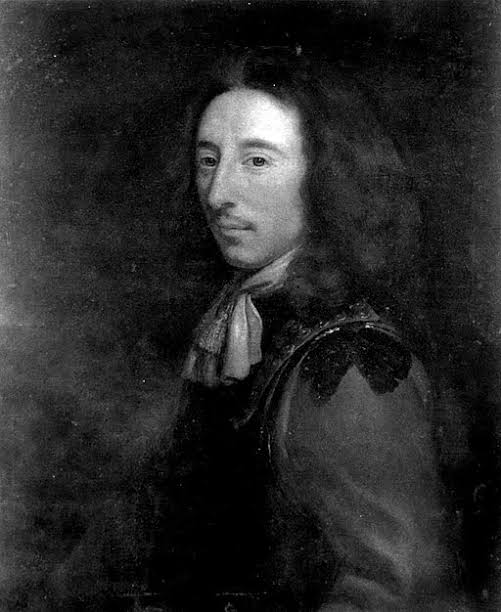
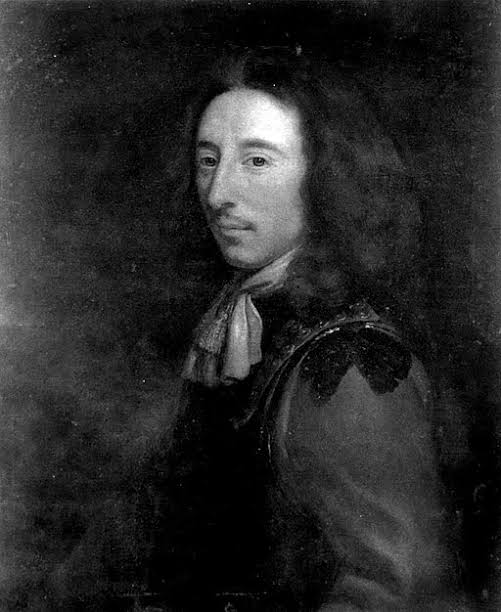
Algernon Sidney provides a revealing example. Later Whig traditions transformed him into a martyr for liberty and a representative figure of an English republican inheritance. Blair Worden’s study of Sidney’s “broader life and fortunes” shows how much is lost when a complicated individual is made to embody a single national or ideological tradition.1 The problem is not that historical memory creates myths; some selection and interpretation are unavoidable. It is that myths can become substitutes for historical explanation.
Reconstruct the context of argument
Context is not decorative background added after a text has been read.2 It helps establish what political act the text performed. Which controversy did the author enter? What assumptions could be taken for granted? Which rival positions were available, and which words carried meanings that are no longer obvious to us?
This approach cautions against treating later fame as evidence of contemporary importance. A posthumous edition can enlarge a thinker’s apparent influence, while later political movements may discover an ancestor who did not understand themselves in the terms subsequently assigned to them. Sidney’s afterlife illustrates how editing, biography and party history can reinforce one another until a retrospective identity appears natural.
Contextualisation does not imprison a text in the past. On the contrary, it allows us to explain change. Once we recover what an argument meant in one controversy, we can trace how its language was detached, translated and redeployed in another. Reception is part of intellectual history, but it should not be confused with original intention.
Avoid the mythology of coherence
Quentin Skinner warns against a “mythology of coherence”: the tendency to treat everything a writer said as part of a single, perfectly ordered doctrine.3 Historians can create this coherence by selecting congenial passages, smoothing over contradiction or explaining every change as another expression of an unchanging system.

Actual people are rarely so consistent. They write at different moments, for different audiences and under different pressures. Their vocabularies develop, their alliances change and their arguments may contain tensions they never resolved. Sidney could combine republican constitutional commitments with positions on military power that do not fit neatly into a later ideological category. Such discontinuities are evidence, not blemishes to be removed.
Intellectual biography therefore needs to remain alert to change across a life. A statement should be located in the circumstances of its composition before it is used to construct a thinker’s general identity. This does not make interpretation impossible. It makes the resulting interpretation more historically responsible.
Make an argument, not an inventory
Context alone is not enough. An intellectual historian must explain what the recovered evidence changes. A catalogue of books, quotations and influences may be useful, but scholarship requires an argument about their significance. Does the evidence revise a familiar chronology, recover a neglected political language, complicate an established category or alter our understanding of how an idea travelled?
The strength of that argument depends upon its relationship to existing scholarship. A new interpretation should identify what earlier accounts explain well as well as where they become insufficient. Historical revision is most convincing when it replaces neither admiration with denunciation nor one rigid label with another, but offers a fuller account of the available evidence.
Explain why the revision matters
The final question is the one Professor Whatmore repeatedly impressed upon our class: what is the point of the exercise? Discovering complexity is not automatically a contribution. The historian must show why a revised account changes the wider story we tell about political language, religious authority, social order or historical change.
Complete knowledge of the past is impossible, but that is not a reason to abandon precision. By comparing texts, reconstructing controversies and resisting retrospective coherence, we can move closer to the range of purposes an argument possessed in its own time. We can also explain how later readers transformed it.
Conclusion
Writing intellectual history is a movement between close reading and historical reconstruction. It begins with a problem, establishes the languages available to historical actors, tests inherited interpretations and advances an argument about why the difference matters. Its aim is not to turn thinkers into timeless authorities or villains, but to recover the contested worlds in which they wrote.
Related Reading
Continue exploring related themes across The Intellectual Historian:
- Skinner and Foucault: Genealogy and Historical Method
- Beginnings in Intellectual History: Context, Texts and Method
- Michel Foucault: Power, Knowledge and the Practice of History
Notes
- Blair Worden, “The Commonwealth Kidney of Algernon Sidney,” Journal of British Studies 24, no. 1 (1985): 1–40, at 1–2. ↩
- Richard Whatmore, What Is Intellectual History? (Cambridge: Polity, 2015), 8–24. ↩
- Quentin Skinner, “Meaning and Understanding in the History of Ideas,” in Visions of Politics, vol. 1, Regarding Method (Cambridge: Cambridge University Press, 2002), 57–89, at 67–72. ↩
Selected Bibliography
- Skinner, Quentin. Visions of Politics. Vol. 1, Regarding Method. Cambridge: Cambridge University Press, 2002.
- Whatmore, Richard. What Is Intellectual History? Cambridge: Polity, 2015.
- Worden, Blair. “The Commonwealth Kidney of Algernon Sidney.” Journal of British Studies 24, no. 1 (1985): 1–40.
Article word count: 867 words
Cite this article
Chicago style: Samuel Woodall, “Writing Intellectual History: Context, Argument and the Problem of Myth,” The Intellectual Historian, 8 January 2024, https://theintellectualhistorian.com/2024/01/08/writing-intellectual-history/.
Leave a Reply