
Political opposition is now treated as an ordinary feature of constitutional government. Governments expect criticism, rival parties claim the right to replace them, and opposition can be presented as a service to the political system rather than an attack upon it. Yet this assumption has a history. In early modern Europe, organised political division was more commonly associated with faction, sedition and the collapse of public order.1
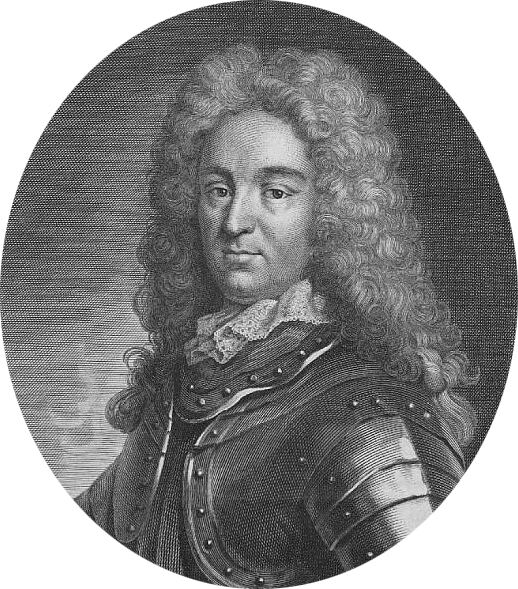
Paul de Rapin de Thoyras, a French Huguenot exile who became one of the eighteenth century’s most influential historians of England, wrote at a moment when this older suspicion of faction was becoming increasingly difficult to sustain. The Glorious Revolution had not ended political conflict. It had entrenched Whig and Tory alignments, sharpened disputes about succession and religious allegiance, and left the post-Revolution settlement exposed to Jacobite opposition. Rapin’s achievement was to ask how liberty might survive this enduring disagreement.2
From faction to party
For much of the early modern period, political unity appeared essential to the health of the commonwealth. Classical accounts associated faction with the pursuit of private interest at the expense of the common good. The English Civil Wars, regicide and religious upheavals of the seventeenth century made that inherited fear immediate. Political division could mean rival sovereignties, armed conflict and the dissolution of civil peace.3
The settlement of 1688-89 complicated this political vocabulary. England’s mixed constitution divided authority among Crown, Lords and Commons, while increasingly durable Whig and Tory groupings offered competing interpretations of monarchy, Parliament, succession and religious liberty. Disagreement could no longer plausibly be treated as a temporary interruption before harmony returned. It had become a persistent feature of political life.4
Rapin recognised this change. In his Dissertation sur les Whigs et les Torys, first published in 1717, he explained English party divisions to readers on the Continent by placing them within a longer constitutional history. Whigs and Tories were not simply the products of personal ambition or momentary passion. Their differences grew from rival interests and interpretations embedded within the English constitution itself.5
This did not make every partisan action legitimate. Rapin remained deeply alert to extremism, political passion and the danger that party loyalty might overwhelm the public good. His argument was subtler: disagreement could not be abolished, but it could be moderated. Once political conflict was channelled through institutions, rival parties might restrain one another and help prevent constitutional power from becoming arbitrary.6
Exile, persecution and constitutional plurality
Rapin’s understanding of political difference was shaped by experience as well as scholarship. Born into France’s Protestant minority, he lived through the persecution that followed the revocation of the Edict of Nantes in 1685.7 Exile exposed the destructive consequences of a state attempting to impose religious unity through coercion.
He later served the Williamite cause, accompanying William III to England and fighting in Ireland. The Revolution settlement offered a constitutional alternative to Bourbon absolutism, but it was not a politics without conflict. Confessional division, disputes over royal authority and competing dynastic loyalties remained powerful. The Treaty of Utrecht in 1713 and the Jacobite rising of 1715 made questions of opposition and allegiance still more urgent.8
This experience helps explain why Rapin did not treat uniformity as the only basis of stability. Enforced unity could itself become a form of political danger. A free constitution therefore required a means of containing disagreement without extinguishing it.9
History as constitutional argument
Rapin developed this interpretation on a far larger scale in his Histoire d’Angleterre, published between 1724 and 1727. The work traced the history of English government through struggles over royal authority, parliamentary power, religion and succession. Political conflict appeared not merely as evidence of national decline, but as part of the historical process through which constitutional liberty had been defined and defended.10
His account remained Whiggish in its Protestant and constitutional sympathies. Hugh Trevor-Roper later described Rapin’s history as a classic statement of the Old Whig interpretation.11 But describing Rapin only as a partisan historian misses the more original dimension of his work. He attempted to explain why competing parties had become structural features of English political life and how their rivalry might be made compatible with constitutional stability.12
The distinction between conflict and collapse was crucial. Unrestrained faction could still destroy government. Constitutional opposition, however, could expose abuses of power, preserve institutional balance and give political disagreement a form short of rebellion. Rapin’s historical writing therefore occupied a transitional position between an older language in which faction was inherently corrupt and a more modern acceptance of organised opposition.
The beginnings of loyal opposition
Rapin did not formulate the later doctrine of “His Majesty’s Loyal Opposition,” nor should he be made into a nineteenth-century liberal before his time. His importance lies instead in helping to make that later idea conceivable.13
Opposition became potentially loyal when it challenged ministers or measures without rejecting the constitution itself. Its legitimacy depended upon moderation: the willingness to remain within institutional forms, accept the continuing authority of government and distinguish criticism from rebellion. Party conflict was tolerable not because division was inherently virtuous, but because attempts to eliminate it could enable intolerance and arbitrary power.
Rapin consequently reframed one of the central political problems of the eighteenth century. The question was no longer simply how faction might be removed from public life. It was how a commercial, Protestant and post-Revolution polity could remain stable while disagreement endured.
That question remains recognisable. Modern constitutional systems continue to depend upon a distinction between opposition that contests power and movements that reject the rules under which power changes hands. Rapin reminds us that loyal opposition is neither automatic nor politically effortless. It depends upon institutions strong enough to contain conflict, and upon political actors willing to treat their adversaries as opponents within a shared constitution rather than enemies outside it.
Rapin’s political world had not overcome fragmentation. Civil conflict, confessional division and disputed loyalties remained within living memory. What changed was the possibility of imagining a political order capable of surviving them. His history suggested that liberty might depend not upon unanimity, but upon learning how to disagree without destroying the constitution that makes disagreement possible.
Read, listen and discuss
Listen: Continue with the companion Beyond the Text episode, “Moderation and Memory: Rapin de Thoyras and the Making of English Party.”
Discuss: Join The History of Ideas Reading Club and consider where constitutional criticism ends and disloyalty begins.
Notes
- Max Skjönsberg, The Persistence of Party: Ideas of Harmonious Discord in Eighteenth-Century Britain (Cambridge: Cambridge University Press, 2021), 1–39. ↩
- Miriam Franchina, Paul Rapin Thoyras and the Art of Eighteenth-Century Historiography (Liverpool: Liverpool University Press, 2021), 1–34; Skjönsberg, Persistence of Party, 40–76. ↩
- Skjönsberg, Persistence of Party, 1–39. ↩
- Skjönsberg, Persistence of Party, 40–76. ↩
- Paul de Rapin de Thoyras, A Dissertation on the Rise, Progress, Views, Strength, Interests, and Characters of the Two Parties of the Whigs and Tories, trans. John Ozell (London, 1717); Skjönsberg, Persistence of Party, 40–76. ↩
- Rapin de Thoyras, Dissertation; Skjönsberg, Persistence of Party, 40–76. ↩
- Franchina, Paul Rapin Thoyras, 1–34. ↩
- Franchina, Paul Rapin Thoyras, 1–34; Skjönsberg, Persistence of Party, 40–76. ↩
- Skjönsberg, Persistence of Party, 40–76. ↩
- Paul de Rapin de Thoyras, The History of England, trans. Nicholas Tindal (London: James and John Knapton, 1726–31), esp. the preface and the accounts of the seventeenth-century constitutional conflicts; Franchina, Paul Rapin Thoyras. ↩
- Hugh Trevor-Roper, “Our First Whig Historian: Paul de Rapin-Thoyras,” in From Counter-Reformation to Glorious Revolution (London: Secker & Warburg, 1992), 249–65, esp. 262. ↩
- Skjönsberg, Persistence of Party, 40–76; Franchina, Paul Rapin Thoyras. ↩
- Skjönsberg, Persistence of Party, 40–76. ↩
Bibliography
- Franchina, Miriam. Paul Rapin Thoyras and the Art of Eighteenth-Century Historiography. Liverpool: Liverpool University Press, 2021.
- Rapin de Thoyras, Paul. A Dissertation on the Rise, Progress, Views, Strength, Interests, and Characters of the Two Parties of the Whigs and Tories. Translated by John Ozell. London, 1717.
- ———. The History of England. Translated by Nicholas Tindal. London: James and John Knapton, 1726–31.
- Skjönsberg, Max. The Persistence of Party: Ideas of Harmonious Discord in Eighteenth-Century Britain. Cambridge: Cambridge University Press, 2021.
- Trevor-Roper, Hugh. “Our First Whig Historian: Paul de Rapin-Thoyras.” In From Counter-Reformation to Glorious Revolution, 249–65. London: Secker & Warburg, 1992.
Article word count: 1,064 words
Cite this article
Chicago style: Samuel Woodall, “Rapin: The Forgotten Historian of Party,” The Intellectual Historian, 15 September 2026, https://theintellectualhistorian.com/2026/09/15/rapin-the-forgotten-historian-of-party/.
Leave a Reply