
Michel Foucault transformed the way historians and philosophers approach institutions, expertise and the production of truth. His histories of madness, medicine, punishment and sexuality did not ask only whether past ideas were correct. They examined the practices through which certain objects – the mad person, the patient, the delinquent or the sexual subject – became available to knowledge at all.
Foucault is often summarised by the phrase “power is everywhere”. That formulation can mislead if it suggests an invisible force controlling every thought or makes historical explanation impossible. His more challenging claim was that power and knowledge develop together through particular relationships, institutions and techniques. Knowledge is not simply false because it is connected to power; rather, the categories through which truth is established have histories that should be investigated.1
A philosopher writing histories
Born in Poitiers in 1926, Foucault studied at the École Normale Supérieure and worked in France, Sweden, Poland, Germany and Tunisia before his election to the Collège de France in 1970. His chair was titled “History of Systems of Thought”, an apt description of a body of work that crossed philosophy, history, psychology, medicine and political theory. He died in 1984.2

Foucault described his books as histories, but they depart from a conventional narrative of steadily improving knowledge. He was interested in discontinuity: moments when the rules governing what could be said, observed and treated as evidence changed. This approach challenged histories that began with present-day categories and traced their supposed development backwards as if their final form had always been waiting to appear.3
Archaeology: the rules of discourse
Foucault’s earlier method is commonly called archaeology. In The Archaeology of Knowledge (1969), he examined discourse not as a collection of statements made by isolated authors, but as practices governed by rules. At a given time, some questions, concepts and forms of evidence appear intelligible while others become difficult to formulate.4
This does not mean that everyone in a period shares a single worldview. Discourses contain disagreement and transformation. Archaeology asks what makes those disagreements possible: how objects are defined, who is authorised to speak, which concepts can be combined and what procedures distinguish serious knowledge from error.
In The Order of Things (1966), Foucault used the term episteme for the historically specific relations that organise fields of knowledge. The concept drew attention away from individual intellectual influence and towards deeper patterns connecting disciplines. Critics have argued that this emphasis can make change appear abrupt or impersonal, but it provided historians with a powerful way to study the conditions under which knowledge becomes thinkable.5
The Birth of the Clinic and the medical gaze
The Birth of the Clinic (1963) explores a reorganisation of medical perception around the end of the eighteenth century. Foucault did not simply argue that doctors acquired more facts or that institutions conspired to control patients. He examined how hospitals, teaching, clinical observation and pathological anatomy created a new relationship between visible symptoms, bodily lesions and medical language.6
The “medical gaze” isolates signs within the patient’s body and makes them comparable across cases. This can produce genuine diagnostic knowledge while also transforming the sick person into an object of observation. The point is not that humane care existed before the clinic and dehumanisation followed it. A new field of knowledge made some truths and interventions possible at the same time as it rearranged authority between practitioner and patient.
This helps explain Foucault’s importance beyond medical history. Institutions do not merely house ideas developed elsewhere. Their architecture, routines, records, examinations and professional hierarchies help constitute the objects about which experts speak. The archive for intellectual history therefore includes administrative practices and material arrangements as well as canonical texts.7
Genealogy: knowledge, struggle and contingency
During the 1970s, genealogy became more prominent in Foucault’s work. Drawing selectively upon Nietzsche, genealogy challenged stories of pure origins and inevitable progress. It traced how concepts and institutions emerged from contingent struggles, accidents and appropriations. Practices that later appear natural or necessary can be shown to have been assembled historically.8
Genealogy is not the claim that everything is fiction. Its critical force depends upon historical evidence. By reconstructing how a practice came into being, it separates the present from the assumption that things could never have been otherwise. Historical contingency opens a space for criticism without supplying a ready-made political programme.
Power/knowledge
Foucault rejected a model in which power belongs only to a sovereign, government or ruling class and then travels downwards through prohibition. Power also operates through dispersed relationships: between teacher and pupil, doctor and patient, examiner and candidate, administrator and population. It is “productive” because it creates classifications, habits, capacities and forms of self-understanding, not because its consequences are benign.
Power and knowledge are joined because observation, classification and intervention reinforce one another. An examination produces information about individuals while placing them within a hierarchy. A case file records a person and simultaneously constructs the kind of case that institutions can manage. The term “power/knowledge” captures this mutual formation.9
This account does not divide society into an official domain of ideology and a free space outside power where truth speaks for itself. Resistance also occurs within power relations and produces its own knowledge, but it is not automatically innocent or true. The historian’s task is to reconstruct specific arrangements rather than presume that institutional knowledge is always false and marginal knowledge always liberating.
Discipline, surveillance and the body
Discipline and Punish (1975) traces a shift from spectacular punishment towards disciplinary techniques directed at conduct. Timetables, drills, ranks, inspections and examinations divide activity into measurable units and train bodies to become both useful and compliant. Prisons form part of this history, but similar techniques appear in schools, armies, hospitals and factories.10
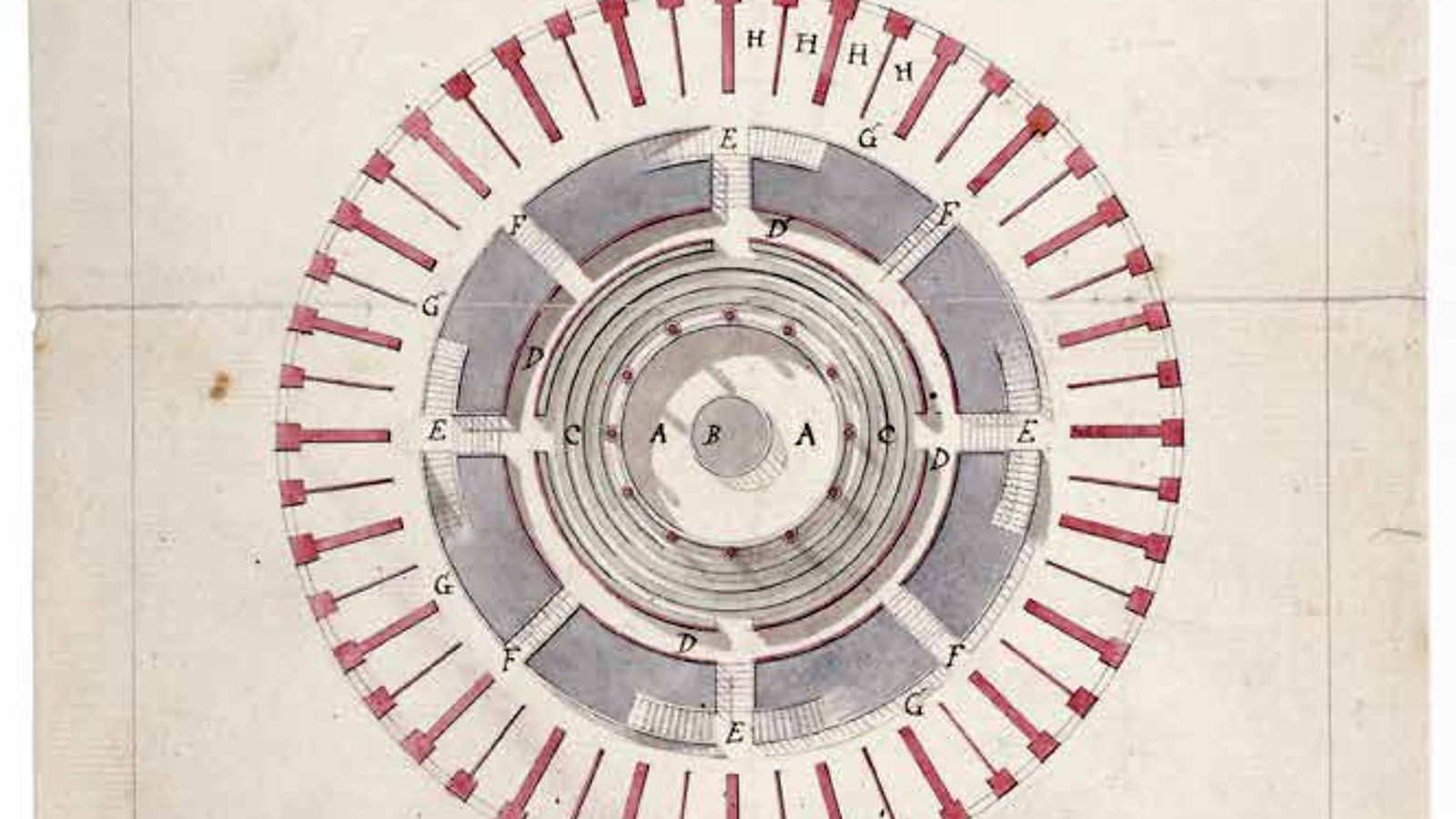
Jeremy Bentham’s Panopticon supplied Foucault with a model of visibility in which inmates might be observed without knowing when observation occurs. Its importance was not that every modern institution literally became a circular prison. It illustrated how the possibility of surveillance can encourage people to regulate themselves.11
Foucault’s argument has sometimes been read as a history of ever-increasing social control. Yet disciplinary power is neither complete nor uncontested. Institutions fail, subjects evade categories and techniques are adapted to purposes their designers did not foresee. The analytical value of discipline lies in identifying mechanisms that broad labels such as “the state” can obscure.
Sexuality, population and biopolitics
In the first volume of The History of Sexuality (1976), Foucault challenged the “repressive hypothesis”: the belief that modern society simply silenced sex until liberation began. He argued that churches, schools, courts, medicine and psychiatry generated an expanding discourse about sexual conduct. Power worked partly by inciting people to confess, classify and interpret desire.12
Foucault also distinguished disciplinary power over individual bodies from “biopolitics”, which addressed populations through birth rates, mortality, disease, housing and public health. Together these processes helped make life itself an object of political calculation. Later scholars have extended, criticised and revised this concept in histories of empire, race, welfare and public health.13
Foucault, Derrida and the history of madness
Foucault’s relationship with Jacques Derrida produced one of the best-known disputes in twentieth-century French thought. Foucault’s History of Madness described the changing exclusion and confinement of madness. Derrida questioned Foucault’s reading of Descartes and whether a history could allow madness to speak without returning it to the language of reason. Foucault later answered sharply.14
The dispute was not a simple opposition between reason and “otherness”. It concerned evidence, interpretation and the historian’s ability to recover what systems of thought exclude. Those questions remain important for intellectual history: how can we analyse the limits of an archive without claiming direct access to a voice wholly outside it?
How historians can use Foucault
Foucault encourages historians to examine categories before using them as neutral descriptions. Terms such as madness, criminality and sexuality do not merely name unchanging objects; their meanings are connected to practices of diagnosis, administration and judgement. He also broadens the range of evidence relevant to intellectual history by placing expert language beside institutions, technologies and embodied routines.
His work nevertheless requires criticism rather than imitation. Historians have challenged particular empirical claims, questioned the limited place he gives to individual agency and warned that broad accounts of discourse can flatten local difference. His early books often centred western European and especially French materials while making claims that seemed more general.15
Used carefully, Foucault does not relieve historians of contextual work. He sharpens it. The question becomes not simply what an author meant, but how particular speakers, institutions and practices established the authority to define an object and tell the truth about it.
Conclusion
Foucault’s histories undermine the comforting opposition between free knowledge and external power. Knowledge can enlarge human capacities and enable effective care while simultaneously classifying, normalising and governing people. Power can constrain, but it also produces the identities and fields through which individuals understand themselves.
This is why historical specificity matters. Foucault did not offer one key capable of unlocking every institution. He offered questions: how did this object become visible, who acquired authority to speak, which procedures produced truth, and what forms of conduct followed? Asked carefully, those questions continue to make intellectual history more attentive to the conditions under which ideas become effective.
Related Reading
Continue exploring related themes across The Intellectual Historian:
- Writing Intellectual History: Context, Argument and the Problem of Myth
- Louis Althusser: Ideology, Institutions and the Politics of Philosophy
- Stefan Collini: Intellectual History, Public Argument and the University
Notes
- Michel Foucault, The History of Sexuality, vol. 1, An Introduction, trans. Robert Hurley (London: Allen Lane, 1979), 93. ↩
- David Macey, The Lives of Michel Foucault (London: Hutchinson, 1993), chap. 1 and epilogue. ↩
- Michel Foucault, The Archaeology of Knowledge, trans. A. M. Sheridan Smith (London: Tavistock, 1972), 3–17, 21–30. ↩
- Foucault, Archaeology of Knowledge, 21–78. ↩
- Michel Foucault, The Order of Things: An Archaeology of the Human Sciences (London: Tavistock, 1970), xxii–xxiv, 168–74. ↩
- Michel Foucault, The Birth of the Clinic: An Archaeology of Medical Perception, trans. A. M. Sheridan Smith (London: Tavistock, 1973), ix–xix, 89–106. ↩
- Foucault, Birth of the Clinic, 64–87, 107–22. ↩
- Michel Foucault, “Nietzsche, Genealogy, History,” in Language, Counter-Memory, Practice: Selected Essays and Interviews, ed. Donald F. Bouchard, trans. Donald F. Bouchard and Sherry Simon (Ithaca, NY: Cornell University Press, 1977), 139–64. ↩
- Michel Foucault, Power/Knowledge: Selected Interviews and Other Writings, 1972–1977, ed. Colin Gordon, trans. Colin Gordon et al. (New York: Pantheon Books, 1980), 78–108. ↩
- Michel Foucault, Discipline and Punish: The Birth of the Prison, trans. Alan Sheridan (London: Allen Lane, 1977), 170–94. ↩
- Foucault, Discipline and Punish, 195–228. ↩
- Foucault, History of Sexuality, 17–35. ↩
- Foucault, History of Sexuality, 135–59. ↩
- Jacques Derrida, “Cogito and the History of Madness,” in Writing and Difference, trans. Alan Bass (Chicago: University of Chicago Press, 1978), 31–63; Michel Foucault, “My Body, This Paper, This Fire,” in History of Madness, ed. Jean Khalfa, trans. Jonathan Murphy and Jean Khalfa (London: Routledge, 2006), 550–74. ↩
- Gary Gutting, Foucault: A Very Short Introduction (Oxford: Oxford University Press, 2005), 50–65, 105–16. ↩
Bibliography
- Derrida, Jacques. “Cogito and the History of Madness.” In Writing and Difference, translated by Alan Bass, 31–63. Chicago: University of Chicago Press, 1978.
- Foucault, Michel. The Archaeology of Knowledge. Translated by A. M. Sheridan Smith. London: Tavistock, 1972.
- Foucault, Michel. The Birth of the Clinic: An Archaeology of Medical Perception. Translated by A. M. Sheridan Smith. London: Tavistock, 1973.
- Foucault, Michel. Discipline and Punish: The Birth of the Prison. Translated by Alan Sheridan. London: Allen Lane, 1977.
- Foucault, Michel. History of Madness. Edited by Jean Khalfa. Translated by Jonathan Murphy and Jean Khalfa. London: Routledge, 2006.
- Foucault, Michel. The History of Sexuality. Vol. 1, An Introduction. Translated by Robert Hurley. London: Allen Lane, 1979.
- Foucault, Michel. Language, Counter-Memory, Practice: Selected Essays and Interviews. Edited by Donald F. Bouchard. Translated by Donald F. Bouchard and Sherry Simon. Ithaca, NY: Cornell University Press, 1977.
- Foucault, Michel. The Order of Things: An Archaeology of the Human Sciences. London: Tavistock, 1970.
- Foucault, Michel. Power/Knowledge: Selected Interviews and Other Writings, 1972–1977. Edited by Colin Gordon. Translated by Colin Gordon et al. New York: Pantheon Books, 1980.
- Gutting, Gary. Foucault: A Very Short Introduction. Oxford: Oxford University Press, 2005.
- Macey, David. The Lives of Michel Foucault. London: Hutchinson, 1993.
Article word count: 1,550 words
Cite this article
Chicago style: Samuel Woodall, “Michel Foucault: Power, Knowledge and the Practice of History,” The Intellectual Historian, 13 October 2024, https://theintellectualhistorian.com/2024/10/13/michel-foucault-power-knowledge-and-historical-context/.
Leave a Reply