
Acknowledgement of Supervision: Professor Richard Whatmore
Under the supervision of Professor Richard Whatmore of the University of St. Andrews, I began exploring intellectual history for my master of letters. The first question to address in such a complex and seemingly intimidating field is to ask how one engages with ‘intellectual history’. Now, different approaches to intellectual history have emerged since the 1960s. The core school of thought that fired the starting gun in the field was the ‘Cambridge School’. This grouping comprised of Quentin Skinner (whose work is the cornerstone to the “contextual” way that my colleagues and I have been taught to read intellectual history), John Pocock (who focussed on “languages” of political ideas), Peter Laslett, John Dunn, James Tully, David Runciman, and Raymond Geuss. The former of these scholars, Skinner, expounded the essence of intellectual history’s goal: to find the author’s intention through understanding the broader context of their works and times without proleptic readings back into their times by historians with ideologies and agendas to push.
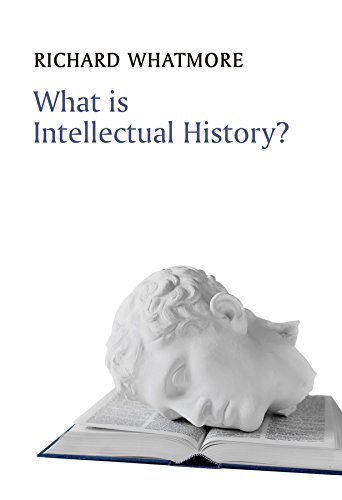
The immediate aim of the ‘Cambridge School’ as it became known, was to avoid judging the political thought and debates of the past from a moral pedestal of the current day. This anachronism resulted in bad readings of history, which failed to take up the ‘objective’ historian’s responsibility of interrogating thought through the social discourses and conversations of political thinkers’ own times. Moreover, they sought to remove the grandeur associated with a canonised series of ‘important’ political texts, an epistemological injustice that had long rendered other supplementary writings irrelevant and skewed the actual extent of influence of the said ‘important’ writings to a height that was not justified. As Prof. Whatmore writes in What is Intellectual History?, our responsibility as intellectual historians (emerging from the reading advocated by the ‘Cambridge School’) is to investigate different thoughts expressed through all varied modes of political discourse and dialogue of a certain period, and thereby judge the “origin and extent of such opinion”. This thereby avoids the teleological readings of thought that had long plagued Whiggish readings of history in the 19th century, to exalt that the path of the progress of ideas had always been leading to the current moment. In fact, there is much more complexity in the array and extent of the influence of ideas and of their own time.1

Of course, like any discipline, intellectual history has had many offshoots, and these have coincided with changes across the fields of the arts and humanities. With the emergence of postmodern literary criticism, for example, post-structural ideas began to form their own school of thought within intellectual history. These were heavily influenced by the works of Foucault and Strauss, who focussed on analyzing thought within ideological contexts. Moreover, intellectual historians such as Dominick LaCapra were heavily influenced by the work of Jacques Derrida, who had argued in his Of Grammatology, that there was “nothing outside of the text”.2 LaCapra took this notion forward in rejecting the traditional Skinnerian notion that authorial intention was the goal of intellectual history (or that intention is much harder to judge than Skinner appreciated) and that it was more important to look at the text and its impact as a cultural force and object. As he writes in his Rethinking Intellectual History, for him the attempt of historians like Skinner to simply place a thinker back in his own times “drastically oversimplifies the problem of historical understanding.”3
Moreover, LaCapra’s work serves to highlight an underlying issue that I have grappled with since starting intellectual history – what’s the point? That isn’t to say I don’t massively admire the hard work conducted by Skinner in attempting to comprehend a thinker in his own times, it is the bedrock from which we must start, but surely the impact of ideas is critical to both explaining how certain realities of history came to be and why they didn’t happen in other ways. Moreover, in an age where we are reassessing race, sexuality, class and all forms of oppression, scholars of thought need to appreciate the lived impact that thought had. I will admit that I have taken a much keener interest in LaCapra’s work than my counterparts, however for me as someone interested in how the political climate today has resulted from the ‘ruins’ or leftovers of debates of old, postmodernism has spoken very clearly to me.4

Another element that was explored very early on was the dichotomy between beginning life as an intellectual history from two perspectives. One is that with enough time and effort an ‘objective’ history can be found. Two, that all history is ‘mythology’, a structure that we uphold to be able to understand the way things were. I think that my counterparts, at least on the whole, start from the former persuasion – that a true factual history can be attested for. However I start from the latter, I understand that we will always, as historians, engage with history somewhat through a lens of our own preconceptions, paradigms and mythologies. My approach here is heavily influenced by my reading for my undergraduate dissertation – especially Karl Popper’s intellectual autobiography Unended Quest, where he summarises what I am trying to put across quite succinctly: “Even theories, products of our intellect, result from the criticism of myths, which are products of our imagination: they would not be possible without myths;”5For me, appreciating that we live by myths, read history through myths and therefore will never have any ‘objective’ history is the very things that make reading history so interesting.
Of course, there is an irony in using Popper as influential in the making of my intellectual history mindset, for it was his narrativising that led John Pocock to accept his reading of history conceptually, Popper having rejected ‘historicism’ or the implanting fixed laws into history, but rejected his view of liberal history’s narrative. That is, Popper began to argue that there was a link going back to Plato, which through Hegel and then to Hitler and Stalin had led to the atrocities of the 20th century – against which Popper plotted some ‘safe’ liberals. This was exactly what intellectual history should not be, playing politics and philosophy randomly with thinkers of the past. Yet, I have struggled to deal with those students who have argued that clearly there is some objective truth in the way history has been written and that (implicitly) to question this would be petty and self-serving as history for history’s sake. To me, if we want to buttress our understanding of the past, the only thing to do is pry open the myths of history writing and see if they hold water.

Related Reading
Continue exploring related themes across The Intellectual Historian:
- Writing Intellectual History: Context, Argument and the Problem of Myth
- A Method in the ‘Madness’:
- Stefan Collini: Intellectual History, Public Argument and the University
Notes
- Richard Whatmore, What Is Intellectual History? (Cambridge: Polity, 2015), 6–7. ↩
- Jacques Derrida, Of Grammatology, trans. Gayatri Chakravorty Spivak (Baltimore: Johns Hopkins University Press, 1976), 158. ↩
- Dominick LaCapra, Rethinking Intellectual History: Texts, Contexts, Language (Ithaca, NY: Cornell University Press, 1983), 23. ↩
- LaCapra, Rethinking Intellectual History, 18–24. ↩
- Karl Popper, Unended Quest: An Intellectual Autobiography (London: Routledge, 2002), 227. ↩
Selected Bibliography
- Derrida, Jacques. Of Grammatology. Translated by Gayatri Chakravorty Spivak. Baltimore: Johns Hopkins University Press, 1976.
- Kelley, Donald R. The Descent of Ideas: The History of Intellectual History. Aldershot: Ashgate, 2002.
- LaCapra, Dominick. Rethinking Intellectual History: Texts, Contexts, Language. Ithaca, NY: Cornell University Press, 1983.
- Pocock, J. G. A. Political Thought and History: Essays on Theory and Method. Cambridge: Cambridge University Press, 2009.
- Popper, Karl. Unended Quest: An Intellectual Autobiography. London: Routledge, 2002.
- Skinner, Quentin. Visions of Politics. Vol. 1, Regarding Method. Cambridge: Cambridge University Press, 2002.
- Whatmore, Richard. What Is Intellectual History? Cambridge: Polity, 2015.
Article word count: 1,131 words
Cite this article
Chicago style: Samuel Woodall, “Beginnings in Intellectual History: Context, Texts and Method,” The Intellectual Historian, 3 February 2023, https://theintellectualhistorian.com/2023/02/03/beginnings/.
Leave a Reply